
Factors that improve chicken meat quality during slaughter
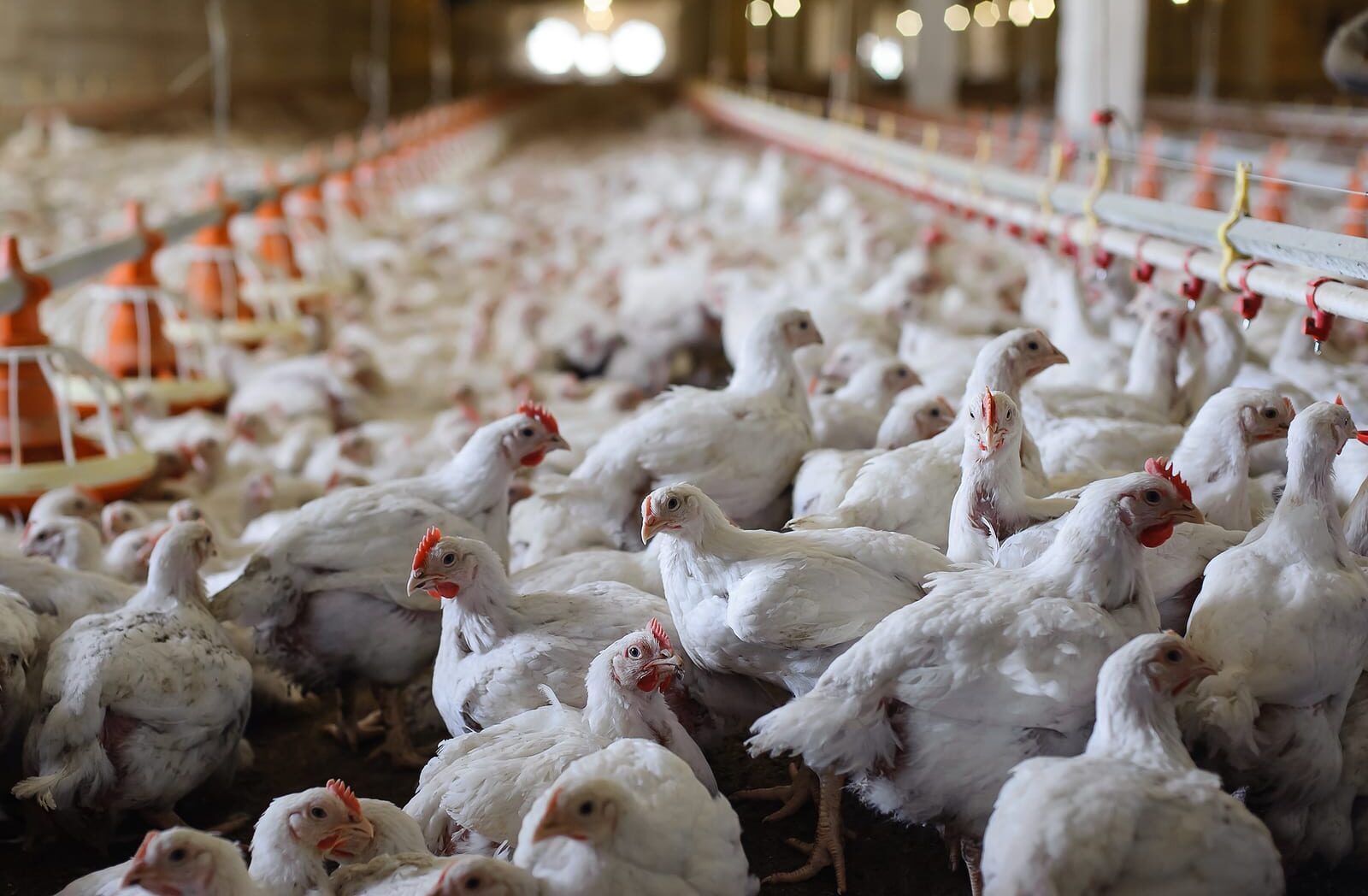
With more than 200 poultry slaughterhouses operating in Iran, growing market demand for quality products and the aim of developing exports, we decided to briefly introduce the factors affecting chicken meat quality at the different stages of slaughter:
1. Removing birds from crates and shackling:
To preserve the appearance of the bird, its thigh should be held with three fingers (index, middle and thumb), taken out of the crate and hung on the shackle at a 90-degree angle. To make this easier, we recommend using a good-quality conveyor and separating the work of unloading and shackling.
•

•
2. Controlling the stunning process:
Each bird should wait no more than 30 seconds before stunning (to let it calm down) and then enter a properly designed, standard stunner.
•
3. Scalding:
Together with chilling, this is one of the most important stages affecting chicken quality. Its importance is shown by the difference in fresh chicken shelf life between Iran and Europe (3 days in Iran and 6 days in Europe) and the different methods used:
•

•
a) Hard scald: In this method the birds stay in the scalder at 57 °C for 2–3 minutes and then go to plucking, but the protective layer of the skin is removed and the bird spoils faster. The sign of this method is birds leaving the scalder with white skin (a common method in Iranian slaughterhouses).
b) Soft scald: Carried out at 51–55 °C for 2 minutes, this is the best method for producing quality chicken. The protective layer of the skin remains and shelf life is longer. The sign of this method is birds leaving the scalder with yellow skin. Note that this method requires very high-quality scalders and pluckers.
We also recommend Albrek’s two-stage scalders to remove unpleasant odours and improve chicken quality.
•
4. Plucking:
Clearly this stage plays a key role in the appearance of the bird; poor-quality machinery causes a lot of physical damage, such as carcass wounds and broken wings and thighs.
•

•
5. Evisceration:
With automatic evisceration machinery, the steps are:
- Vent cutting and removal
- Opening cut
- Evisceration of the viscera
- Removing the windpipe and crop
- Cutting or breaking the neck
- Final cleaning with the vacuum machine (to maximise carcass quality)
- Inside and outside carcass washing
•

•
6. Chilling:
As mentioned, chicken quality is determined at this stage together with scalding. It is done in the following ways:
a) Water chilling, common in developing countries
•

Advantages:
- Low construction cost
- Low running costs (cold storage and electricity)
- Short chilling time
- Higher carcass weight and profitability (because water does not evaporate)
Disadvantages:
- Water remaining in the carcass and faster spoilage
- Spread of possible contamination to all birds and a higher microbial load
- More labour
b) Air chilling, common in Europe and Canada
•
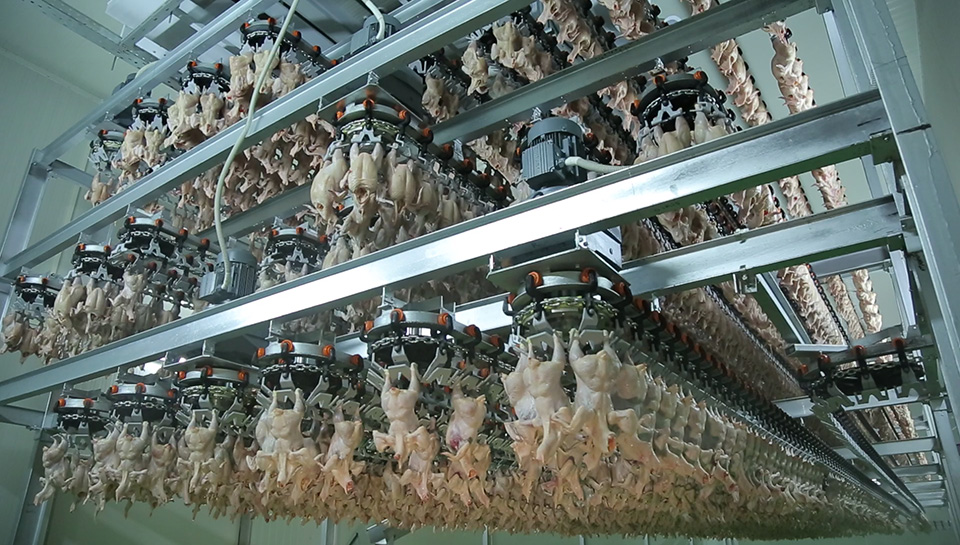
Advantages:
- Maximum removal of water from the carcass and slower spoilage
- Prevents the spread of possible contamination to all birds and significantly reduces the microbial load
- Less labour
Disadvantages:
- High construction costs
- High running costs (cold storage and electricity)
- More land needed
- Long chilling time (twice that of water chilling)
- Lower carcass weight and profitability (because of water loss)
•
c) Combined system (water and air chilling) Very common in various designs in Asian countries, Iran, the USA and Brazil. In the author’s view, because speed and product quality can be controlled and adjusted to the end market and slaughterhouse profitability, it is the most suitable system for our country.
In the stages above we have briefly reviewed the primary factors affecting carcass quality during slaughter; in future articles we will look at factors affecting chicken quality before slaughter.
Related posts
The role of dye in feed production: A study of factors affecting quality and correct principles of use
In this article, we will discuss the key points related to the die. From the structure…

Conditioned Mash – an Overlooked Feed Form for Livestock
Many scientific articles have compared the effects of feed form including mash, pellet and crumble in…

Design and technical equipment: key to better feed quality
Why some livestock, poultry and aquaculture feed mills are profitable while others are not.