
Design and technical equipment: key to better feed quality

Why are some livestock, poultry and aquaculture feed mills profitable while others are not? Why does some mills’ feed sell better? The reason is often technical design and equipment selection. Choosing a manufacturer skilled in feed engineering and a provider of complete solutions is vital to a feed company’s success. The factors affecting feed quality can be summarised in three groups: raw material quality, feed formulation and feed processing technology. With the same raw materials and formulation, feed quality depends only on processing technology and equipment performance. Because the digestive systems of chickens, fish, shrimp and pets differ, feeds of different sizes and degrees of cooking are needed. Upgrading feed processing technology is one of the most important ways for modern feed companies to improve product quality.
Below we consider the whole production process and point out, step by step, the improvements that can be made.
1. Feed particle size
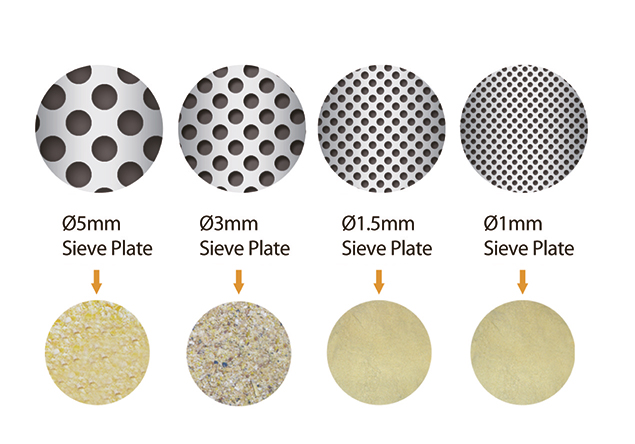
In general, many factors such as feeding method, processing costs, and animal size and growth characteristics must be considered for particle size. Particle size should not exceed 1/3 of the pellet diameter. The right particle size can improve nutrient digestibility, while over-grinding increases energy use, reduces capacity and destroys nutrients in the feed. Research shows that vitamin A in feed pelleted after repeated grinding can fall by up to 40%.
The key to particle size control technology is grinding each raw material to the size best suited to digestion, so that every batch of feed achieves the best growth performance and profit. Studying the right size of each raw material for digestion in different animals is essential.
For aquatic feed, using a pulverizer (powder mill) is essential. Research shows that if the mill screen is reduced from 1.2–1.5 mm to 0.6–0.8–1 mm, the feed conversion of crab feed can improve by 5–10%. Particle size therefore has a significant effect on nutrient variability. Particles that are too small or too large may break into layers that affect the rate of digestion. Only by choosing the right technical designer, supplier and professional equipment can good-quality feed be produced.
•
•
2. The effect of the weighing system
Feed formulation is a major factor in the nutrients and quality of pelleted feed. Formulas high in corn and soybean cannot produce good pellets because of low binding; adding wheat, which has binding properties, can improve pellet quality. Each component of the formula must be combined accurately and fat kept to a minimum. As a core feed production process, weighing accuracy directly affects feed composition and nutrient absorption by animals. Likewise, nutrients can only be balanced with suitable mixing systems. Weighing has a great effect on weight accuracy and formulation; most technical improvements relate to the following:
• Check the scales regularly to ensure measurement accuracy.
• The feed formula must be correct, and raw materials must be replaceable.
• The raw material feeding speed must be suitable.
• The control system must work properly.
• Weighing equipment must be used correctly.
• Record the weighing process accurately, especially when medication is used.
• Use error-free computer control technology to manage weighing accuracy.
•
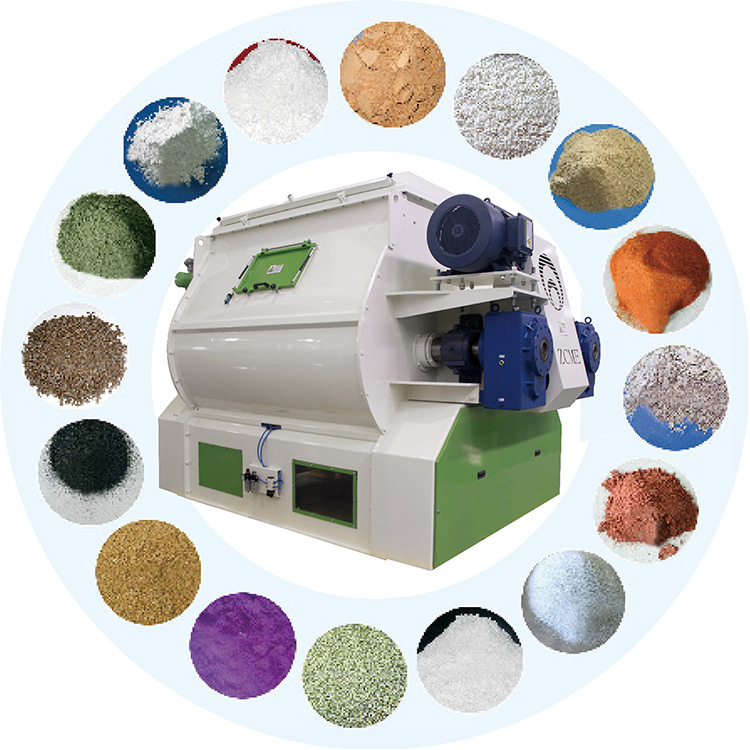
3. The effect of uniform mixing
Mix uniformity is vital to feed quality because it determines whether the animal can receive all the nutrients through the feed. Air uniformity between the mixer bin and the mixer also affects nutrients. Oversized finished product and pellet mill bins, as well as a long conveying line, will destroy feed uniformity and reduce feed conversion. Choosing the right mixer, mixing time and the correct way of adding raw materials are vital to ensure uniformity and preserve nutrients. Mix uniformity control covers mixed feed, concentrates, additives, premixes and liquid feed. Technical improvements in mixing should focus on the following:
• Choose suitable mixers to ensure uniformity.
• Add raw materials in order (coarse materials first, then finer ones).
• Add all raw materials, especially premixes, in order and in the right amounts.
• When the formulation changes, clean the mixer thoroughly to prevent cross-contamination.
• Separate premix from the main mixing process to prevent cross-contamination.
• Minimise the conveying distance and drop height of materials after weighing, and avoid conveying equipment such as pneumatic systems that cause segregation.
•
•
4. The effect of pelleting
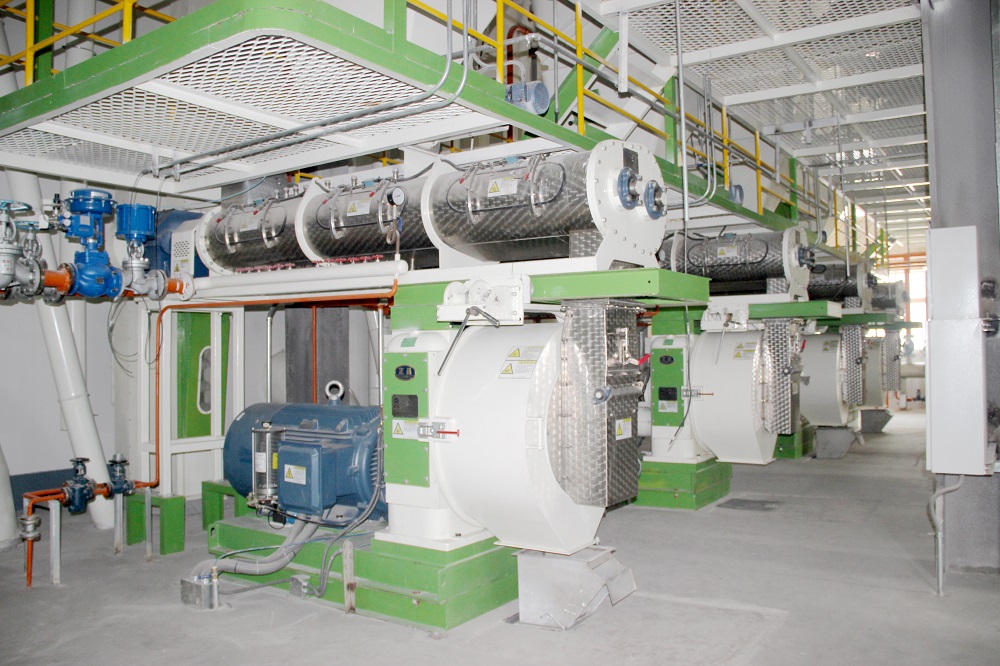
Pellet quality control is necessary to preserve feed nutrients, so it must be strictly managed and monitored. Conditioning is the first stage of pellet quality control, covering temperature, time, water and degree of starch gelatinisation. The second stage covers fines, cooler temperature, moisture, cutting blade smoothness and the water stability of the feed. To meet these requirements, the steam supply and control system and the conditioner, pellet mill, cooler and screener must all be properly equipped and the control parameters set scientifically. Steam entering the conditioner must be unsaturated and free of condensate to ensure sufficient starch gelatinisation and prevent blockage from excess moisture. Steam must pass through a steam trap and pressure-reducing valve, and its flow rate must match the material feed rate. Steam with the right properties is therefore essential for quality pellets.
Conditioning plays a vital role in pellet quality. Mixtures high in cereals usually stay in the conditioner for at least 40–60 seconds, while the conditioner temperature must be kept at 85–98 °C to improve starch gelatinisation. High-fibre materials should stay in the conditioner for less time. When liquids such as molasses are added, the materials should stay longer (up to 30 minutes) so the molasses is fully absorbed.
•
•
5. Killing bacteria
High-temperature conditioning for a short time of 60–160 seconds can kill bacteria, and many such conditioners have been built. Feed stability at high temperatures must also be considered during conditioning: low-stability materials should not be put through high-temperature conditioning but should instead be added later with liquid spraying to ensure pellet quality. Many vitamins have low heat resistance and may be destroyed during high-temperature conditioning or pelleting; vitamins A, E, C and B1 break down quickly as conditioning temperature and time increase. Critical conditions for conditioning vitamin-containing feed are temperatures above 90 °C, moisture above 15% and times over 60 seconds. A formulation with good heat stability must therefore be chosen. Proper conditioning, air intake and correct mixing methods are also vital for pelleting.
Pelleting also affects feed enzymes and other microbial nutrients, which cannot withstand high temperature, moisture and pressure. Phytase activity has been reported to fall by 87.5% above 80 °C, which affects phosphorus utilisation. Microbial additives are especially sensitive to high temperatures and lose all activity if the pellet temperature exceeds 85 °C. In this case it is better to use liquid adding equipment after pelleting or to use more heat-resistant enzymes.
•
6. The effect of storage and transport
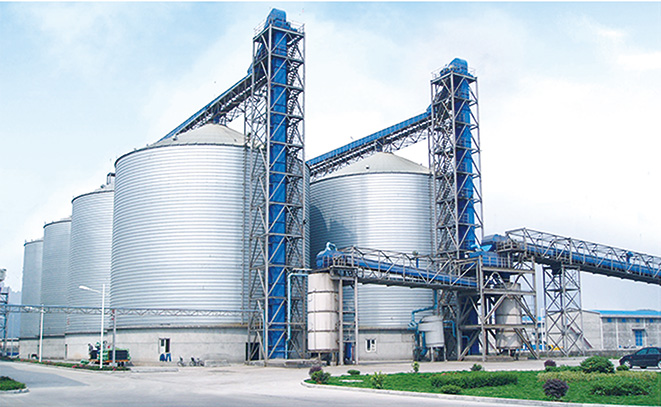
Cross-contamination usually occurs during storage and transport. Residues in vehicles, bins, intake pits and feed processing equipment can cause cross-contamination, and harmful microbes and pests are also sources. To meet growing demands for feed safety, hygiene and nutrition, conveyors and bins without residue must be provided, and heat treatment technologies such as high-temperature cooking, extrusion, high-pressure processing and UV must be used. With comprehensive use of these technologies, the final pellets can have satisfactory nutrients and quality.
•
•
7. Anti-nutritional factors
Some of the anti-nutritional factors (ANF) and harmful substances in raw materials are destroyed during conditioning. Anaerobic treatment before pelleting can effectively kill bacteria and improve feed quality; this has always been a key research topic for professional technicians.
Animals react differently to the same anti-nutritional factors depending on species and age. Anti-nutritional factors can be divided into carbohydrate inhibitors, mineral inhibitors, protease inhibitors and so on. Pelleting weakens them as much as possible through conditioning and high-temperature pelleting.
During pelleting, starch is gelatinised and protein is denatured after conditioning so that animals can better digest and absorb starch and protein. However, the technical quality of the feed equipment determines raw materials of specific sizes for specific animals. Protein denaturation has little effect on amino acids but greatly improves absorption, so more of the protein can be used.
•
8. The effect of the technical process
Anti-nutritional factors in feed can cause disease in pets and delay their growth. Because these factors are closely linked to feed processing technology, nutritionists have defined many methods to eliminate them, but nutrients may be lost in the process. Extrusion at high temperature can improve feed quality and limit nutrient losses. Anaerobic treatment can effectively kill bacteria and preserve vitamins. Fermentation can remove the toxic effects of anti-nutritional factors and preserve vitamins. Enzymes not only remove toxic effects but are also beneficial for health.
Eliminating anti-nutritional factors in raw materials has become vital in choosing feed processing technology and equipment. Feed quality and nutrients can only be guaranteed with professional technology and equipment. As nutrition advances, technicians at professional companies can offer better ways to remove anti-nutritional factors and help improve feed quality and nutrition.
In this article we covered points that can improve the performance of a livestock, poultry and aquaculture feed mill: important measures that increase feed quality and the profitability of feed producers. What other points would you add?
If you prefer, you can listen to this article as a podcast .
Related posts
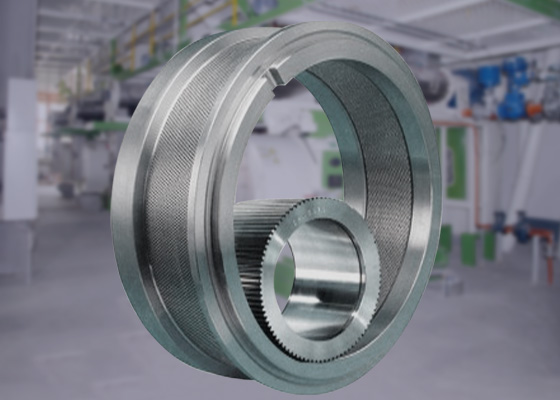
The role of dye in feed production: A study of factors affecting quality and correct principles of use
In this article, we will discuss the key points related to the die. From the structure…

Conditioned Mash – an Overlooked Feed Form for Livestock
Many scientific articles have compared the effects of feed form including mash, pellet and crumble in…

Natural alternatives to antibiotics in poultry feed (antibiotic-free poultry)
A new era has begun in which livestock producers are moving towards production systems with limited…