
Factors affecting the quality and efficiency of feed pelleting

Durability, hardness and appearance are generally reflected in pellet quality, which is influenced by many factors. The effects of raw material quality on pelleting quality and efficiency include:
•
1. The effect of raw material particle size on pelleting quality and efficiency
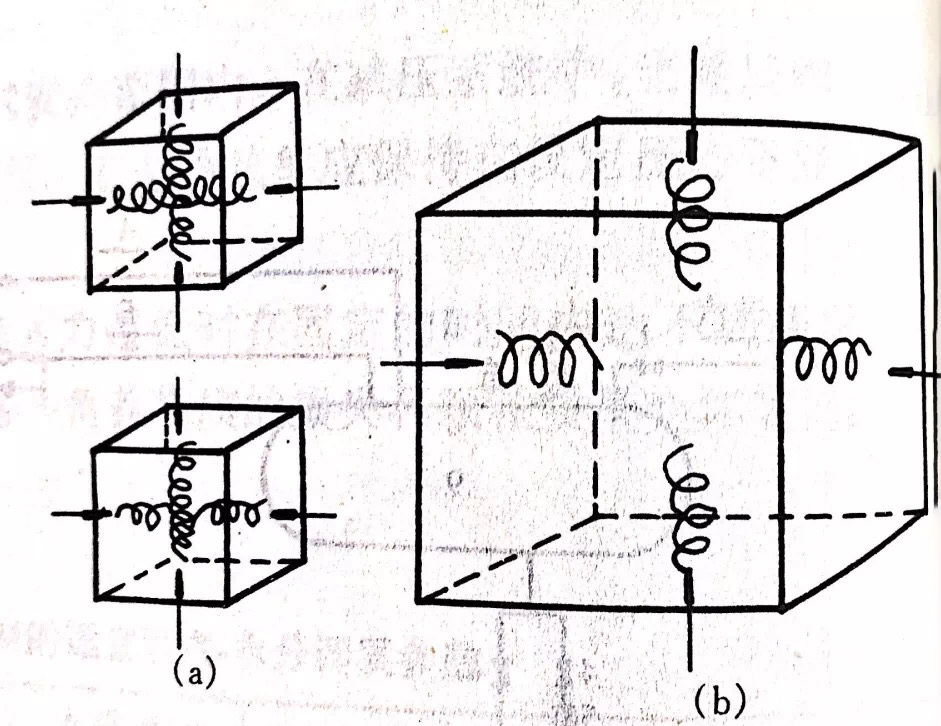
Raw materials can be divided into coarse, medium and fine particles; coarse particles are generally over 3 mm in diameter. Medium and fine particles are suitable for pelleting, need less energy and cause less die and roller wear. Compared with coarse particles they have a larger contact surface with steam in the conditioner; steam easily penetrates the core of small particles, causing physical and chemical changes that improve pelleting quality.
As shown in Figure 1, steam easily penetrates the core of medium and fine particles (the two small cubes on the left), but cannot penetrate the core of coarse particles (the large cube on the right), which stays dry.
•
•
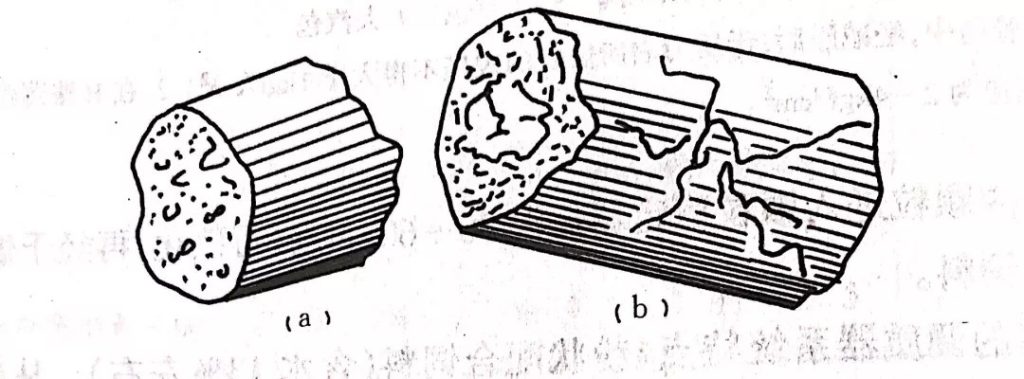
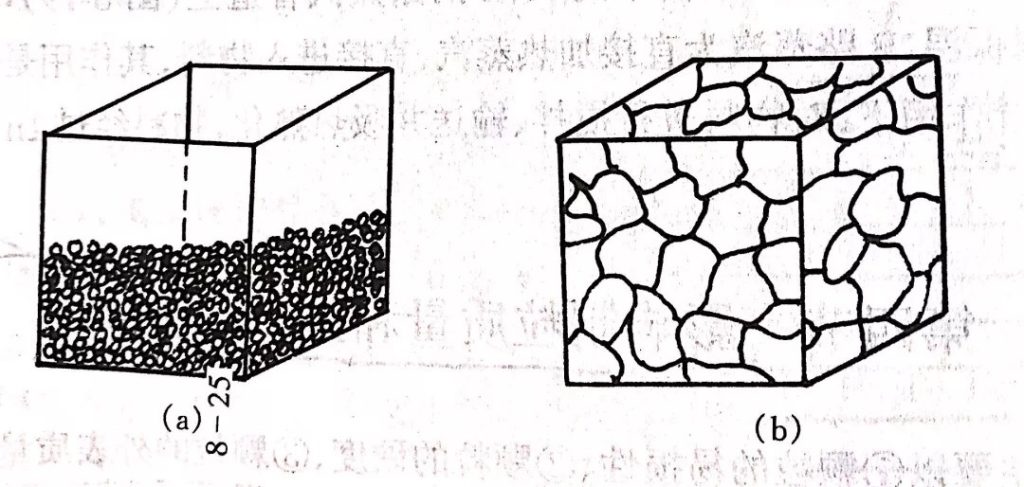
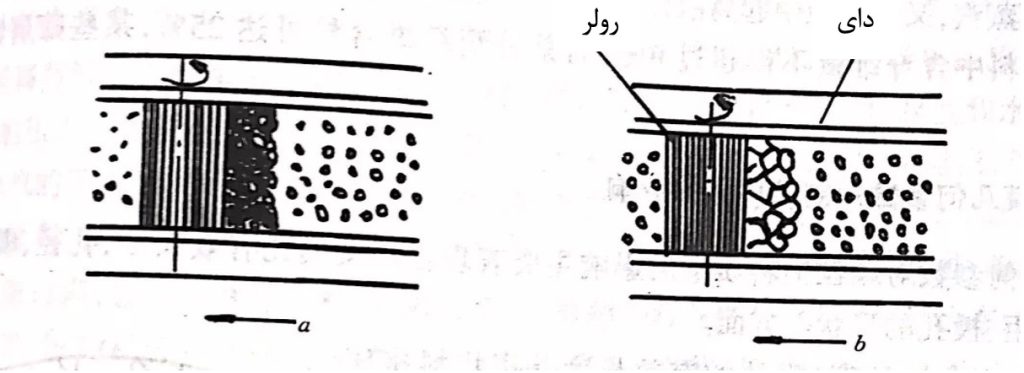
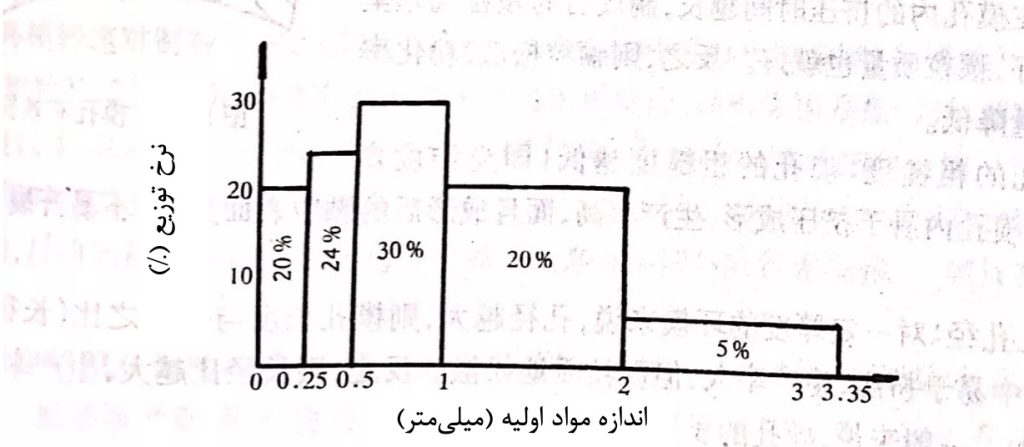
In addition, coarse particles are more likely to crack after pelleting (Figure 2). Medium and fine materials form dense, compressed particles (Figure 3) and pass better through the die holes (Figure 4), causing less wear on the inner die surface and giving higher output. However, grinding materials too finely increases production costs. The ideal particle size is a sensible mix of coarse, medium and fine materials; for example, for 6 mm livestock and poultry pellets, a sensible particle size distribution is shown in Figure 5.
•
•
For 2 mm shrimp feed, 85% of the raw material should pass a 40-mesh screen. The minimum die hole diameter is currently 0.8 mm, so the raw material diameter for pelleting should not exceed one third of the die hole diameter; after grinding, the material should pass a 60-mesh screen (0.267 mm) to reach the required size.
•
2. The effect of feed density on pelleting efficiency
Pelleting efficiency is related to raw material density. Light materials have a density below 0.33 t/m³ and heavy materials above 0.4 t/m³. Light materials give low output and heavy materials higher output; for example, alfalfa with a density of 0.22 t/m³ gives 4 t/h, while cottonseed meal at 0.53 t/m³ gives 16 t/h.
•
3. The effect of protein-rich materials on pelleting
High-protein raw materials (usually dense), such as soybean meal and cottonseed meal, are extruded by the die and roller, generating frictional heat that benefits pelleting. However, for very high-protein feeds (such as calf feed and concentrates), a lot of powder or urea must be added during pelleting to improve the pelleting effect.
•
4. The effect of fat-containing materials on pelleting
Fat is an excellent lubricant for pelleting: it increases output, reduces wear and extends roller and die life. Even if the feed contains fat, more can be added before pelleting. Too much fat, such as 6%, softens the pellets and makes them hard to form. If the fat content is high (over 3%), 1–2% can be added during mixing and the rest sprayed on after pelleting.
•
5. The effect of fibre-containing materials on pelleting
Fibre has an adverse effect on pelleting: it can reduce output and increase wear on the die holes. There are two types of fibre: stringy fibre such as alfalfa, sweet sprout stalks and sweet potato vines, and hull fibre such as oat, soybean, cottonseed and peanut hulls. Stringy fibre absorbs steam and softens during conditioning, binding particles together and improving pellet strength, while hull fibre cannot absorb steam, makes the particles fall apart and affects their quality.
Related posts

The role of dye in feed production: A study of factors affecting quality and correct principles of use
In this article, we will discuss the key points related to the die. From the structure…

Conditioned Mash – an Overlooked Feed Form for Livestock
Many scientific articles have compared the effects of feed form including mash, pellet and crumble in…

Design and technical equipment: key to better feed quality
Why some livestock, poultry and aquaculture feed mills are profitable while others are not.