
The role of the conditioner in feed pelleting

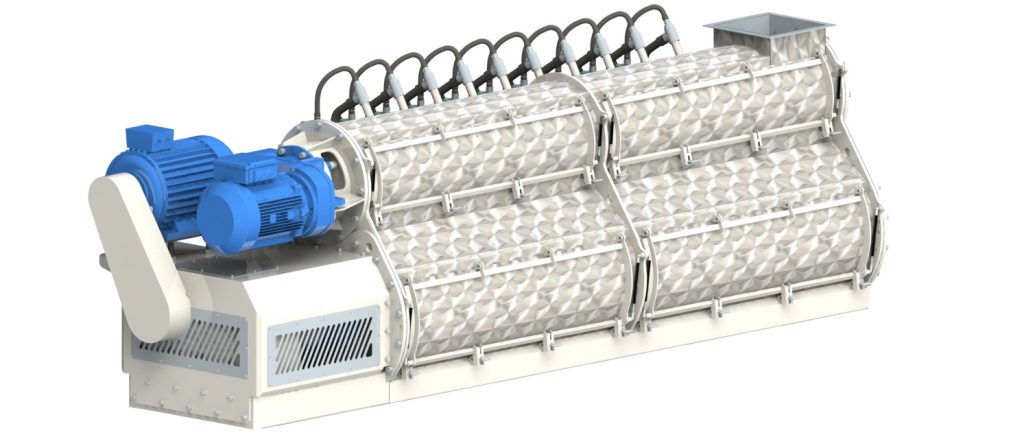
Conditioning is a heat treatment of mash before pelleting. Domestic and international research shows that conditioning is one of the most important factors in pellet quality, accounting for 20% of overall pellet quality.
With growing market demand for pellet mills, livestock, poultry and aquaculture feed producers are paying more attention to the conditioning stage of the feed process.
Improving and upgrading conditioning equipment is one of the most important ways to improve pelleted feed quality and increase market competitiveness.
•
•
The conditioner makes mash more complete and better. Most animals cannot digest raw starch but can largely digest cooked starch. Hydrothermal treatment in the conditioner greatly increases starch gelatinisation and at the same time promotes protein denaturation. Denatured protein is easily hydrolysed, raising the digestibility of pelleted feed.
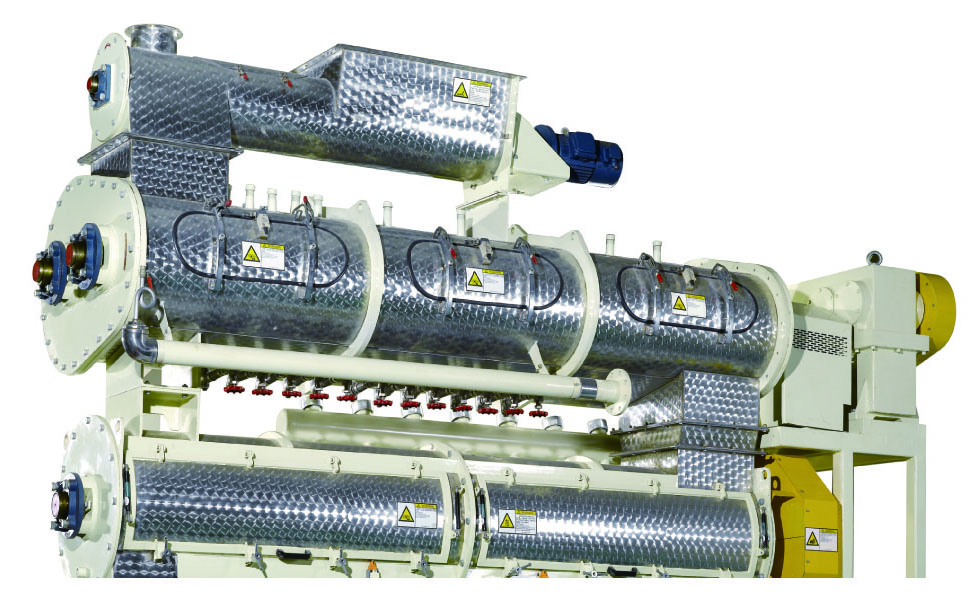
Mash can also be sterilised in the conditioner. Most pathogenic bacteria such as Escherichia coli and Salmonella are not heat-resistant, and conditioning at a certain temperature can kill them, ensuring feed hygiene.
Compared with drug-based prevention, this method offers low cost, no contamination, no drug residues and no side effects.
•
•
Conditioning can greatly increase the water stability of pellets. Through the hydrothermal effect of steam, sticky components such as gelatinised starch and denatured protein act as binders and effectively bond the other components.
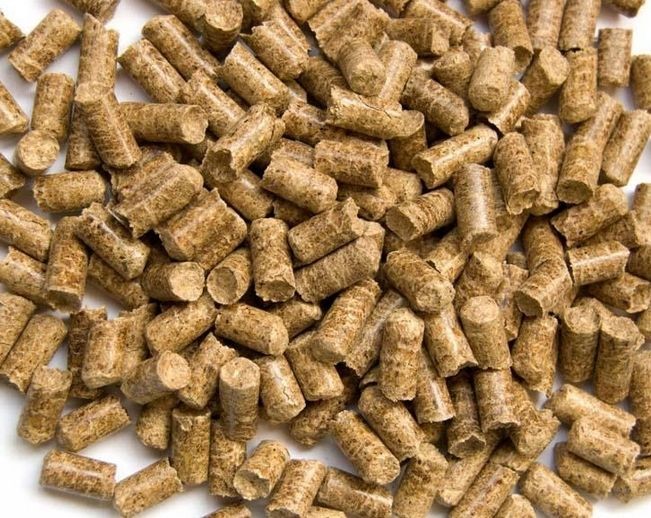
Through extrusion between the die and roller, particles combine more closely, making the pellets denser and cleaner, so they are not easily eroded by water, increasing stability in water.
•
•
Conditioning can improve pelleting performance, increase output, save energy and extend the life of the pellet mill die and roller. Conditioned materials become softer and more plastic, friction between the die and roller is reduced, much less mechanical energy is turned into heat during pelleting, and die and roller wear is reduced.
Related posts
The role of dye in feed production: A study of factors affecting quality and correct principles of use
In this article, we will discuss the key points related to the die. From the structure…

Conditioned Mash – an Overlooked Feed Form for Livestock
Many scientific articles have compared the effects of feed form including mash, pellet and crumble in…

Design and technical equipment: key to better feed quality
Why some livestock, poultry and aquaculture feed mills are profitable while others are not.